
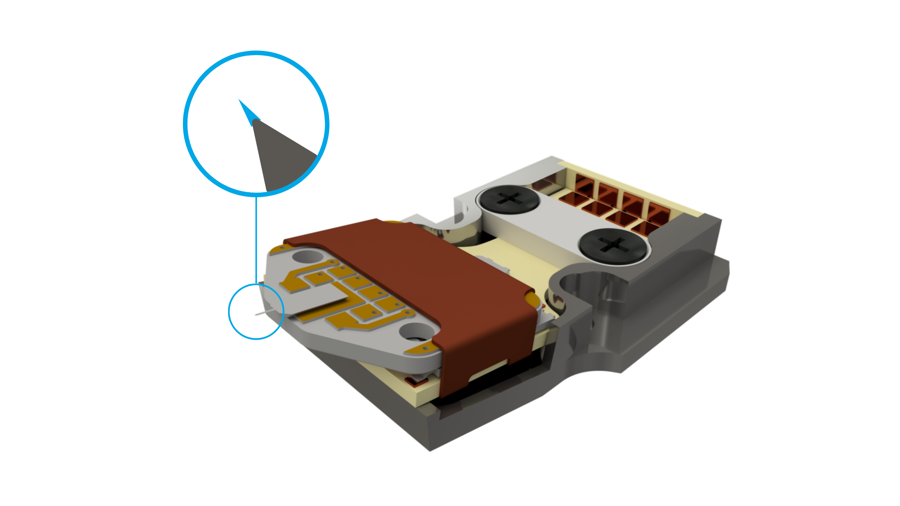
NenoProbe Conductive
Pt-Sharp
Our new self-produced self-sensing probe with a locally grown platinum tip. Ideal for high-resolution conductivity measurements and characterization of nano-features, expanding the possibilities of the existing NenoProbe Conductive.
Fully compatible with our current NenoProbe holder.
Measurement modes: C-AFM, Topography, I-V spectroscopy
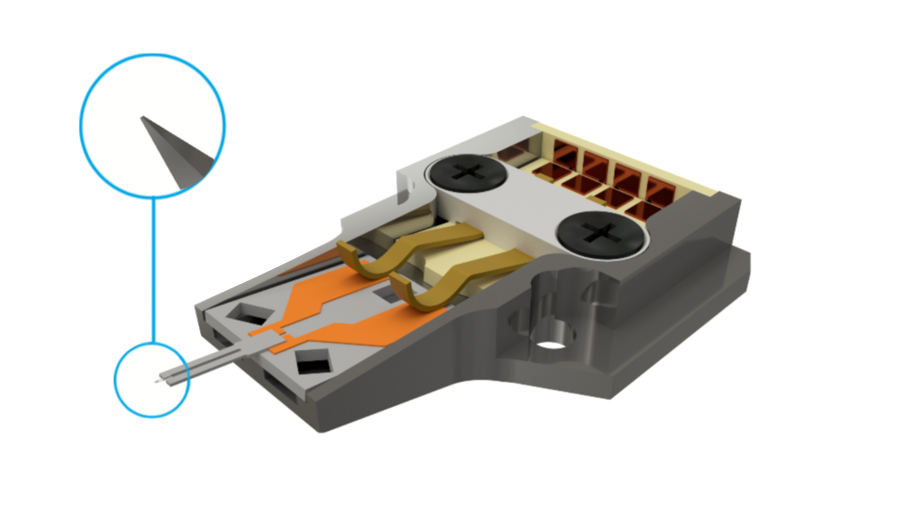
Akiyama
The go-to probe for CPEM measurements thanks to its visible tip. Capable of measuring AFM topography and energy dissipation signal at the same time.
Measurement modes: Topography, Energy dissipation
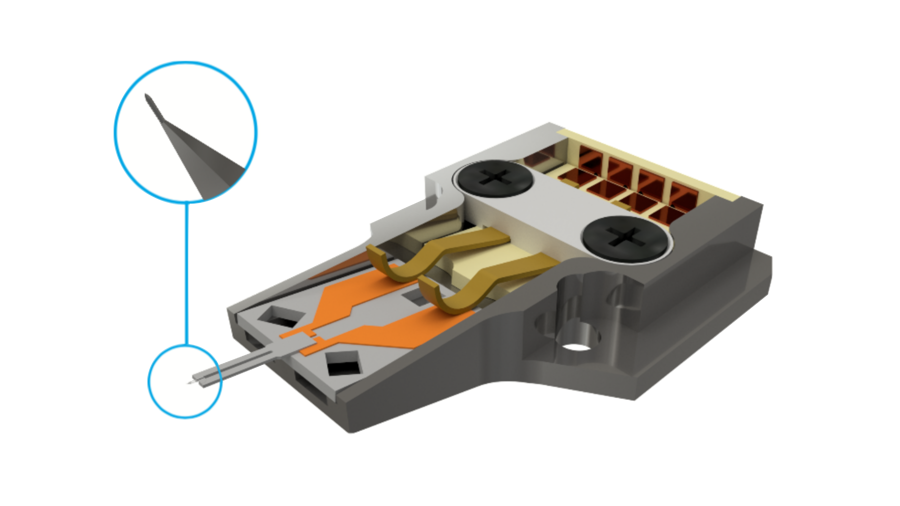
NenoProbe Magnetic
Magnetic-sensitive probe based on the Akiyama sensor, that can be used in SEM thanks to its visible tip. It uses the same probe holder as regular Akiyama.
Measurement modes: Topography, MFM
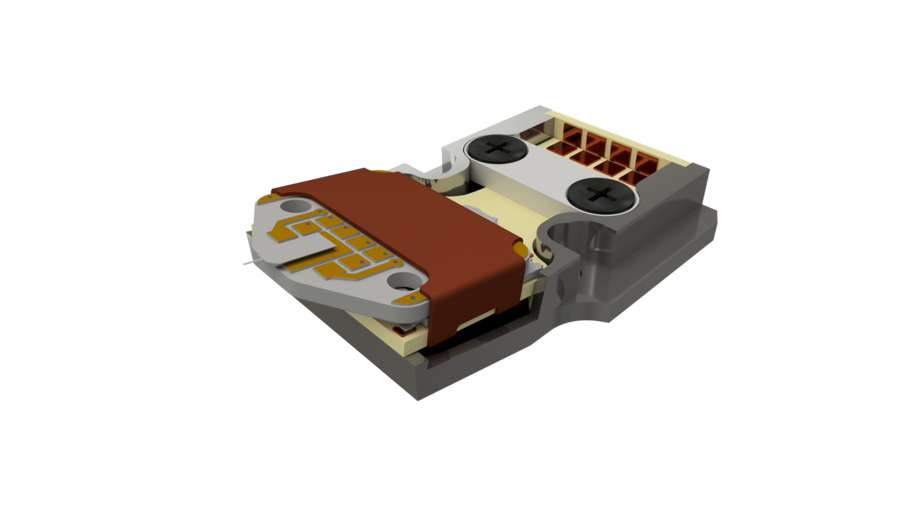
NenoProbe Conductive
Our self-produced AFM probe with a conductive tip, capable of performing C-AFM, KPFM, PFM and I-V spectroscopy.
Measurement modes: C-AFM, KPFM, PFM, I-V spectroscopy
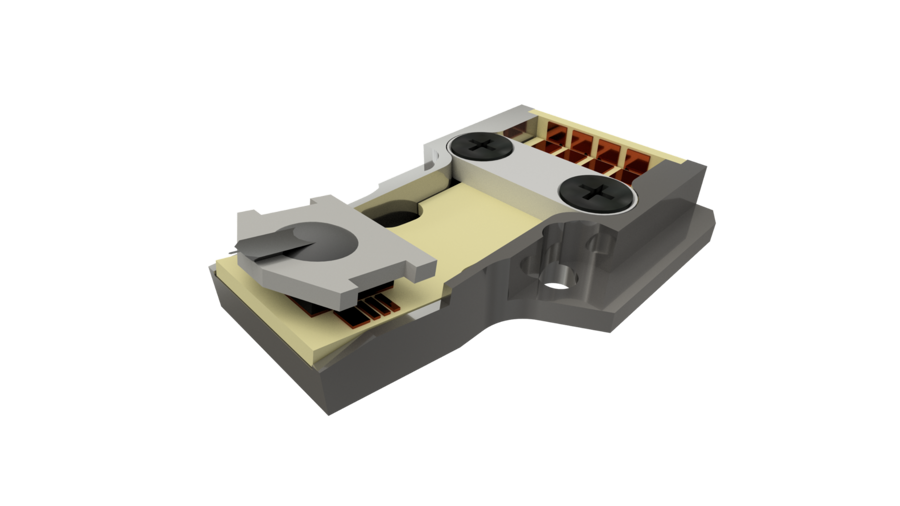
Piezo-resistive probes
AFM probe suitable for both dynamic and contact mode topography measurements and F-Z spectroscopy.
Measurement modes: Topography, F-z spectroscopy





Are you interested? Feel free to...

LiteScope Featured in a Langmuir Study on Operando Work-Function Imaging of Catalytic Reactions
A new study in Langmuir combines operando SEM with Kelvin probe force microscopy (FM-KPFM) to image, for the first time, the work function of a catalyst surface while a chemical reaction is actually happening on it.

LiteScope Featured in a Nanoscale Study on Back-Contact-Free Electrical AFM
A new study in Nanoscale introduces electron-beam excited AFM (EB-AFM) — a way to run electrical AFM without a physical back-contact. A low-energy electron beam near the AFM probe acts as a remote electrode, removing the destructive sample preparation that conventional conductive AFM requires.

LiteScope Helps Localize Defects Invisible to SEM in a Joint Study with NVIDIA
A study presented at ISTFA 2025 by NVIDIA and NenoVision introduces a streamlined approach to semiconductor failure analysis. The work integrates in-situ conductive AFM (CAFM) with plasma FIB in a single SEM platform, making it possible to localize electrical defects that conventional SEM imaging can miss.